
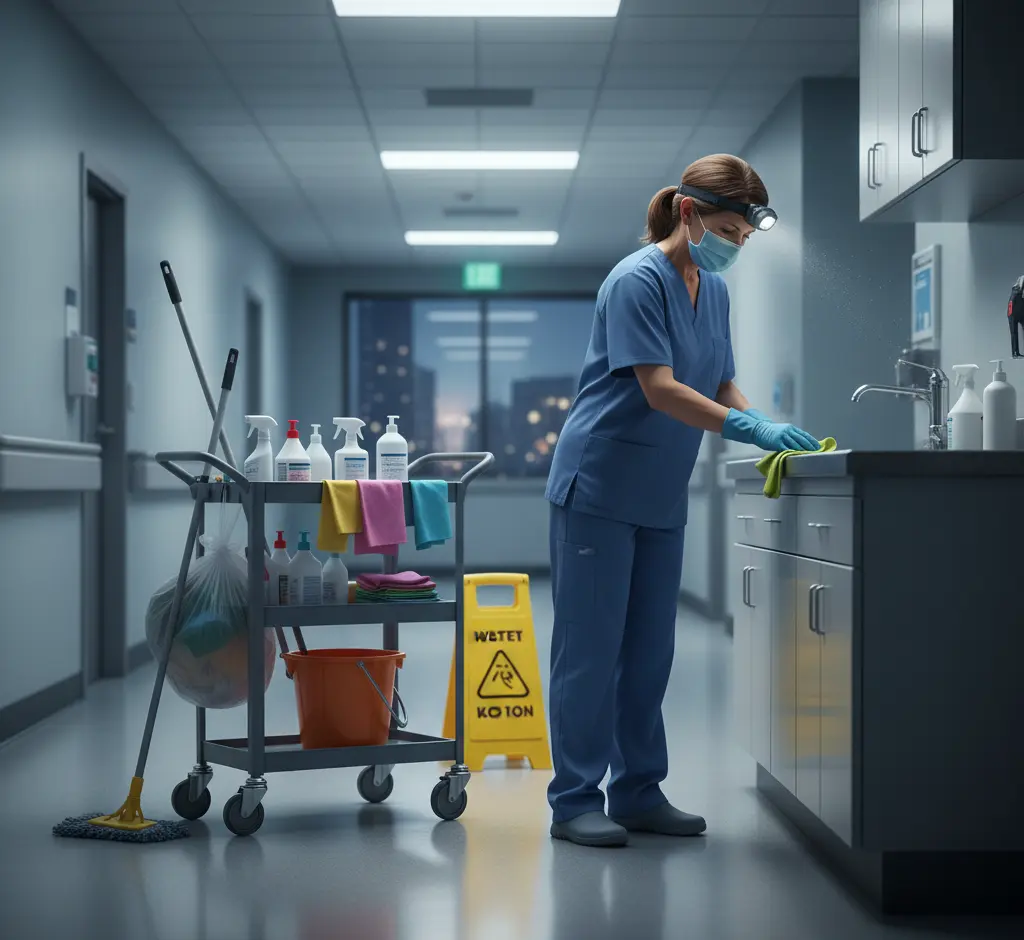
Ever noticed how we love to classify jobs into neat categories? White collar, blue collar, pink collar. It’s like we’re trying to make sense of an invisible social ladder through the colors of shirts people never actually wear anymore. And yet, these labels still shape how we think about work and worth. Which brings us to a simple, surprisingly deep question: is cleaning a blue collar job?
Let’s dig into that, because the answer isn’t just yes or no. It says something about how we see labor, respect, and the quiet dignity in the kinds of work most people pass by without a second thought.
Learn why even cleaning jobs can teach important career lessons in Cleaning a Blue Collar Job Value.
What Defines Cleaning a Blue Collar Job
The term “blue collar” comes from the image of a worker in sturdy denim or navy overalls. These were the people who built things, repaired them, operated machines, or worked with their hands all day. Physical work. Skill-based. Essential.
A blue collar job is typically one that requires manual labor rather than sitting behind a desk. Think mechanics, welders, electricians, plumbers, maintenance staff. They might work in factories, construction sites, or service-oriented fields. The common threads are effort, endurance, and skill—not an office cubicle or a corporate badge. So where does that leave cleaning? Right in the center of it.
Cleaning is classic blue collar work. It’s physical, often repetitive, but far from simple. Whether you’re a janitor making sure an office shines before morning, a hotel housekeeper turning over a dozen rooms in a shift, or part of an industrial cleaning team scrubbing machinery and hazardous spaces, you’re doing work that takes hands-on skill and serious stamina.
Curious about industry-specific blue-collar opportunities? Check Job for a Driller.
Where Cleaning Fits in the Labor Category
On paper, cleaning falls under the service industry. But culturally and economically, it’s long lived in the blue collar world. The work is physical, and most cleaners are paid hourly, not salaried. They rely on practical experience and training more than formal education. It’s not work you do behind a desk. It’s work that gets things done out in the real world.
Still, there’s something interesting here. Cleaning straddles different categories depending on where and how it’s done. A janitor in a school or hospital clearly fits the blue collar mold. But what about someone running their own residential cleaning business? Or a luxury home cleaner managing high-end clients? Those roles start blending elements of service, entrepreneurship, and customer relations. The labor is still physical, but there’s business skill and client management woven in too.
That’s what makes cleaning so fascinating. It’s simple enough to define, but diverse enough to challenge the limits of any single label.
The Skills and Effort Behind Cleaning Work
Here’s a truth most people don’t realize until they’ve done it professionally: cleaning well is a skill. A serious one.
There’s muscle memory involved, sure, but also technique, awareness, and precision. A good cleaner knows which chemicals can handle grease without stripping paint. They know how to disinfect a hospital floor safely without contaminating equipment. They understand airflow, timing, and maintenance routines that keep large spaces usable day after day.
Industrial cleaning specialists might handle high-pressure washers, hazardous substances, or confined-space cleaning in manufacturing plants. That kind of work needs training, safety knowledge, and strong attention to detail. It’s not “unskilled.” It’s just undervalued.
Even at home, professional cleaners often master efficiency systems that make them faster and more thorough than most of us could ever manage. That balance of speed and meticulousness takes time to learn. They carry tools, routines, and habits honed over years. When you meet a good cleaner, you can see it in the rhythm of how they move through a space. Organized. Grounded. Efficient. Like a craftsperson.
How Society Perceives Cleaning Jobs
Here’s where this conversation gets uncomfortable. Cleaning may sit comfortably within the blue collar world, but it’s often treated like the lowest rung on that ladder. And that has more to do with perception than reality.
In most modern economies, cleaning jobs are among the least paid. A janitor or custodian might earn somewhere between $25,000 and $35,000 a year. A specialized cleaner in industrial or hazardous environments could make more, sometimes closer to $50,000. But wages alone don’t tell the story. The deeper issue is how society views this kind of work.
A mechanic gets credit for fixing cars. A plumber gets credit for fixing pipes. But cleaning? It’s invisible when done well. You only notice it when it’s missing. That invisibility makes it easy for people to overlook the human effort behind clean spaces.
There’s also a gender and class element. Many cleaning jobs are filled by women, often immigrants or people from marginalized communities. They do some of the hardest, most necessary work in cities and towns, yet they rarely get public acknowledgment for it. And that shapes how we collectively talk about labor.
It’s ironic, really. Because every office, school, hospital, restaurant, and store depends on cleaning staff to function. When a hospital’s sanitation team stops, everything stops. The work isn’t glamorous, but it’s fundamental.
For a brief moment, the pandemic made that visible. Remember that? Suddenly, cleaning wasn’t background labor. It was frontline work. Sanitization meant survival. People clapped for healthcare staff, but cleaning teams were alongside them every night, making sure the world could reopen the next morning.
Beyond the Labels: Industrial and Residential Cleaning
Even within the cleaning world, there’s a huge range of roles and responsibilities. Industrial cleaning often involves specialized tasks like cleaning chemical tanks, production floors, or machinery. It’s heavily safety-oriented and often pays more due to risk and complexity.
Residential cleaning, on the other hand, can be more personal and entrepreneurial. Many cleaners build long-term client lists, run small teams, or manage entire local businesses. They master client relations, scheduling, and trust-based work. It’s physical, yes, but it also demands reliability and professionalism that goes far beyond scrubbing floors.
Custodial workers, maintenance teams, and janitors form the backbone of institutions. Their schedules often run opposite to the rest of the organization—they arrive when everyone leaves, ensuring that offices, schools, and facilities are ready for the next day. Their work is constant and unseen, but irreplaceable.
Stay updated on employment trends that affect hourly workers by reading UPS Amazon Job Cuts.
Cleaning vs. Other Blue Collar Trades
| Feature | Skilled Trades (Plumbing/Electrical) | Professional Cleaning Services |
| Physical Demand | High (Lifting/Manual Labor) | High (Stamina/Movement) |
| Tools Used | Power Tools/Specialized Gear | Industrial Chemicals/Sanitation Tech |
| Primary Goal | Repair & Maintenance | Health, Safety & Organization |
| Sector | Heavy Industry / Construction | Service & Facilities Management |
The Real Meaning of “Blue Collar”
If you think about it, “blue collar” is more than a label. It’s a cultural identity. It represents work that’s tangible, skill-driven, and proud in its practicality. The kind of work that doesn’t fit in fancy meetings but makes those meetings possible.
Cleaning belongs here without a doubt. But it also stretches the limits of the term. It reminds us that respect for labor isn’t about collars at all. It’s about contribution. Cleaners might not design the buildings they work in, but they keep them alive. Without them, schools get filthy, hospitals become unsafe, offices lose their polish, and society loses its function.
That’s the paradox of blue collar work. The cleaner the result, the more invisible the worker becomes.
Labels vs the Real Value of Work
So yes, cleaning a blue collar job. But maybe that’s not the question we should be asking.
Maybe the better question is why we still need these categories to decide what kind of work deserves respect. Because if the pandemic, economic shifts, and growing conversations about labor have taught us anything, it’s that the value of work isn’t in its title. It’s in its impact.
Cleaning is hard, honest, necessary work. It takes skill, awareness, and endurance. It demands trust and responsibility. And it deserves far more recognition than it gets.
The next time you walk into a spotless office, a shiny hotel lobby, or a school that smells faintly of disinfectant and polished floors, take a second to notice what’s not visible. The midnight shifts. The aching backs. The quiet pride of someone who knows that cleanliness, comfort, and order depend on them.
It might be blue collar on paper. But in reality, it’s what keeps everything else standing.
Frequently Asked Questions (FAQs)
-
Is cleaning considered unskilled labor?
No, professional cleaning requires knowledge of sanitation protocols, chemical safety, and specialized equipment. -
What is the average salary for a blue-collar cleaner?
In the US, it ranges from $25,000 for general janitorial work to $50,000+ for specialized industrial cleaning. -
Why is cleaning classified as blue-collar work?
Because it involves manual labor, hourly pay, and hands-on skill rather than office-based administrative tasks.