
NYT Crossword: Job for a Driller (Answer)
Clue: Job for a Driller
Most Common Answer: OILWELL (7 Letters)
Alternative Answers: DENTIST (7 Letters) or BORE (4 Letters)
Note: Please choose the correct answer based on your puzzle’s specific theme and letter count.
Looking for a real job? If you are interested in an actual career in the drilling industry (Salary: $80k – $120k), explore our comprehensive guide below for training, safety, and 2026 job insights.
Introduction: Why People Ask About Drill Jobs
Ever scroll past a headline about drilling and think, what does that job actually look like, and why is it in the news again? The phrase that sticks, job for a driller, often pops up beside New York Times stories about energy, labor, or a viral job listing that gets everyone debating risk and pay. It taps into a bigger curiosity, who are the people on rigs and in the field, what do they earn, how safe is it, and where is this career going as technology and climate policy reshape the ground under their boots.
Explore hands-on employment insights with McDonald’s blue-collar job story.
Why This Job Sparks Curiosity
People search this because drilling lives at the intersection of work, money, and identity. It shows up in oil towns, offshore platforms, shale plays, and mine sites. It funds local economies, stirs political arguments, and sits inside family histories where someone’s first big paycheck came from a rig. The New York Times angle can be a reported feature on boom-bust cycles, a story on automation in the Permian, or a job board reference that leads to late night research rabbit holes. Either way, it points to a real career path, tough, technical, and very human.
What Does a Driller Do?
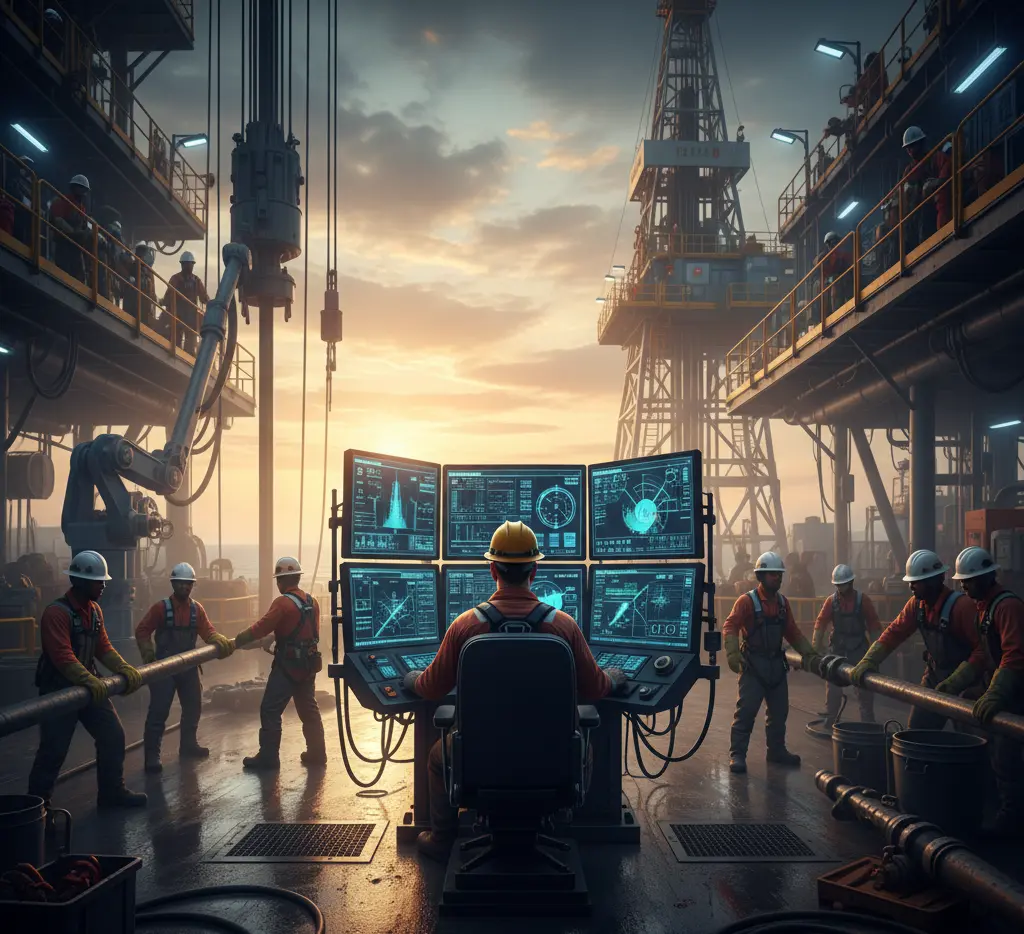
So, what does a driller do, in plain English? A driller runs the drilling operation, manages the drill crew, and monitors the equipment that cuts into earth to reach oil, gas, geothermal heat, water, or ore. On a land rig, the driller sits at the console, reads the gauges, adjusts weight on bit, and keeps the downhole environment stable. On an offshore platform, the same core job scales up in complexity, with marine systems, stricter safety protocols, and more specialized teams. In mining, drilling can mean blast hole work, core sampling, or exploration, each with different tools and rhythms.
The Team Behind the Job
The world behind the job is a choreography of roles. Roughnecks and floorhands handle pipe, keep the deck organized, and make connections fast and clean. Derrickhands work up the mast, manage drilling mud and fluid systems, and keep circulation steady. The driller coordinates all of it, checks for kicks and losses, and stays ready to act if something feels off. There is a superintendent or company man who represents the operator, service hands who run specialty tools, and mud engineers who balance the chemistry that keeps the hole stable. It is a team sport with zero margin for sloppy habits.
| Role | Responsibility | Skill Level |
| Driller | Rig operation aur crew management | High (Expert) |
| Derrickhand | Mud systems aur mast management | Mid-Level |
| Roughneck | Pipe handling aur deck organization | Entry-Level |
| Mud Engineer | Fluid chemistry aur hole stability | Technical Specialist |
Learn the real value of blue-collar work in Cleaning Blue Collar Job Value.
Where Drill Jobs Are Located
Where do these jobs live? Think Texas, North Dakota, Oklahoma, New Mexico, Alberta, the North Sea, the Gulf of Mexico, the North Slope, and mineral regions from Nevada to Western Australia. You will also find drillers in water well outfits that keep farms and towns supplied, and in geothermal projects where heat becomes electricity. The daily life changes with geography. Land rigs can mean long drives and two-week hitches. Offshore rigs often run 14 on, 14 off, with helicopter rides to a steel city at sea. Mining camps can mean fly in, fly out schedules and tight-knit crews that feel like small towns.
Salary and Pay Structure
Let’s talk money, because that is usually the second question. Pay varies by sector and location. Entry-level floorhands start lower, then climb as they master safety and speed. Drillers make more, often significantly more, since responsibility and risk sit at the console. Offshore pay bumps with the isolation and complexity. Mining pay scales with union status and commodity cycles. Overtime, per diems, and bonuses can swing total income a lot from one project to the next. The honest truth, good years can be very good, and downturns can hit hard, which is why seasoned hands save aggressively during boom times.
Training and Requirements
Training and requirements are practical and layered. You need safety certifications, like H2S awareness, well control for oil and gas, working at heights, confined space, first aid, and equipment-specific tickets. Many employers want a clean driving record, a drug-free workplace commitment, and a willingness to work rotating shifts. The technical learning never stops. Drillers learn how to read formation behavior, how to keep differential pressure under control, and how to troubleshoot mechanical issues before they cascade. In mining and geothermal, the tool set changes, but the mindset stays similar, anticipate problems, verify assumptions, protect the crew.
Safety as the Heartbeat of the Work
Safety is the heartbeat of the work. Energy and mineral extraction involve high pressures, heavy loads, moving iron, and weather that does not care about your schedule. Good crews run job safety analyses before tasks, wear PPE like it is non-negotiable, and train on emergency scenarios until the steps feel automatic. The best drillers have a sixth sense for when a small deviation hints at a big problem. They speak up, they slow down, and they never let pride outrun procedure. That culture saves fingers, backs, and lives.
Technology and the Modern Driller
How does modern technology change the job? Automation has arrived, from iron roughnecks that make connections to top drives that keep rotation smooth, to real-time downhole data that shows what is happening thousands of feet below. On some rigs, the driller’s chair looks like a cockpit, screens everywhere, alarms tied to parameters, and decision support software that flags risk. That does not replace experience. It raises the bar. A great driller reads the data, trusts the crew, and still listens to the well the way musicians listen to a room, with attention and humility.
The NYT Angle: Why It’s in the News
So what is the New York Times angle people often mean when they say, job for a driller nyt? Sometimes it is shorthand for a reported piece about hiring shortages in oil and gas, which happens when prices spike and companies scramble to staff up. Sometimes it is a broader story about energy transitions, where drillers move into geothermal or carbon storage projects. It can also be a viral job listing referenced in a lifestyle column, the kind that surprises people who did not know field work could pay that well, or that it asks for that much sacrifice. In all cases, it threads employment, economics, and culture.
Career Growth Opportunities
Career growth is real if you treat the job like a craft. A floorhand who shows up on time, learns fast, and respects safety becomes a derrickhand. From there, the driller’s chair is within reach. Later, toolpusher, rig manager, or company representative roles open up, where leadership and planning share the stage with technical knowledge. Some drillers go into directional drilling or MWD work, guiding the bit with downhole tools. Others cross into maintenance and reliability, because rigs live and die by equipment that works when it has to.
Understand how job market changes affect hourly workers in UPS Amazon Job Cuts.
A Day in the Life of a Driller
What does a day feel like? Early muster, a safety talk, checks on pumps and mud, watch the weather, watch the gauges, and keep the crew moving without burning them out. The rhythm is repetitive until it is not, then something demands all your attention. A connection that sticks, a pump that coughs, a trendline that drifts in a way you do not like. Good drillers communicate constantly, steady voice, clear instructions, no panic in the words even if the moment gets tight. At shift change, you hand off details clean, because small omissions become big problems at 3 a.m.
Pride and Responsibility in the Job
There is pride in this work that outsiders sometimes miss. A deck crew that moves like a single mind. A perfect trip where every stand feels smooth. A well brought in on time with zero incidents. A water well that gives a farm a future. A geothermal bore that will heat a school. The outcomes are tangible. You can point at them. You can say, we did that, and the lights in this town stayed on because we did our job well.
The Bigger Picture: Policy, Climate, and Community
Of course, the job lives inside bigger debates. Climate policy, energy security, local environmental impacts, and community health all sit on the table. Workers feel this in their bones, not as talking points, but as seasons where rigs stack or crews get called back. Many are pragmatic. They take pride in work done safely and with respect for the land. Some look for ways to pivot skills into cleaner projects that still value their know-how, like geothermal or plug and abandonment campaigns that seal old wells properly. The skill set translates, and that matters for the next twenty years.
Is This Career Right for You?
If you are considering this path, ask yourself a few clear questions. Can you work away from home for long stretches? Are you coachable enough to learn fast and humble enough to follow procedure every time? Do you like hands-on problem solving with a team that depends on you? Can your body handle the hours, and will you invest in your health so it stays that way? If the answers feel honest and strong, the rig world can be a gritty, rewarding classroom with mentors who will tell you the truth straight.
Conclusion: The Modern Driller Today
So, job for a driller, what does it look like today? It looks like a skilled operator at a console, a crew that moves with purpose, a set of screens and sounds that speak a language outsiders never hear, and a paycheck that reflects both the risk and the responsibility. It also looks like a future that is changing, where the same grit that built oilfields might be the grit that powers geothermal and cleans up legacy wells. Work that asks for your hands and your head has a way of finding its next chapter.
Frequently Asked Questions (FAQs)
Q1: What is the 7-letter answer for ‘Job for a driller’ in NYT?
Ans: The most common 7-letter answers are “OILWELL” or “DENTIST,” depending on the puzzle’s theme.
Q2: How much does a real-life driller make in 2026?
Ans: On average, experienced drillers in the US can earn between $80,000 to $120,000 annually, especially in offshore or specialized mining roles.
Q3: Do you need a degree to become a driller?
Ans: No, most drillers start as entry-level hands and move up through on-the-job training and safety certifications.